
Case Study · Multi-Brand SaaS Platform
Truck Service Suite
One shared shop-management and invoicing platform, white-labelled into four truck-service businesses. Each brand gets its own public website — behind them all runs the same back office: workorders, invoicing, inventory, fleet maintenance, payroll and financials.
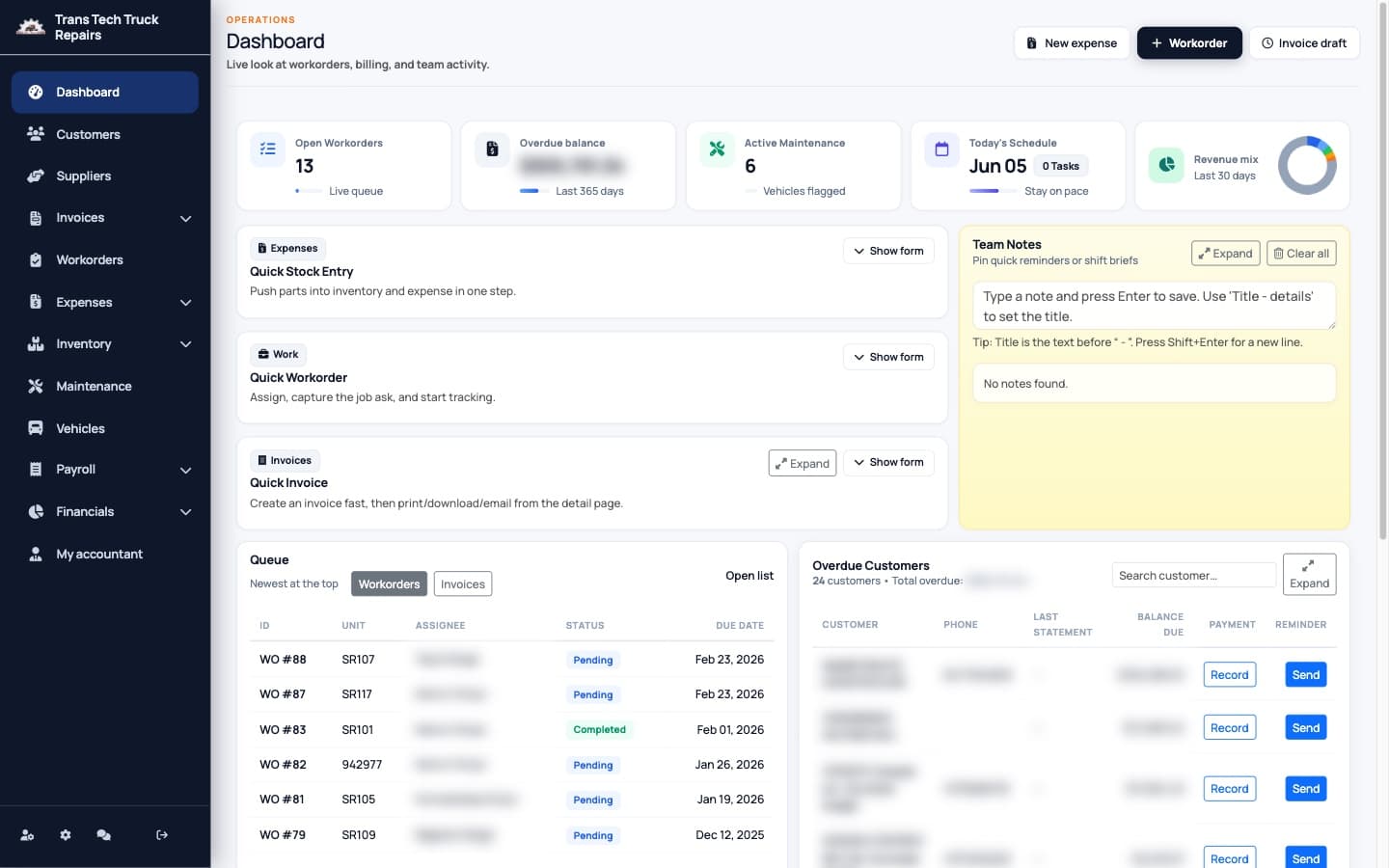
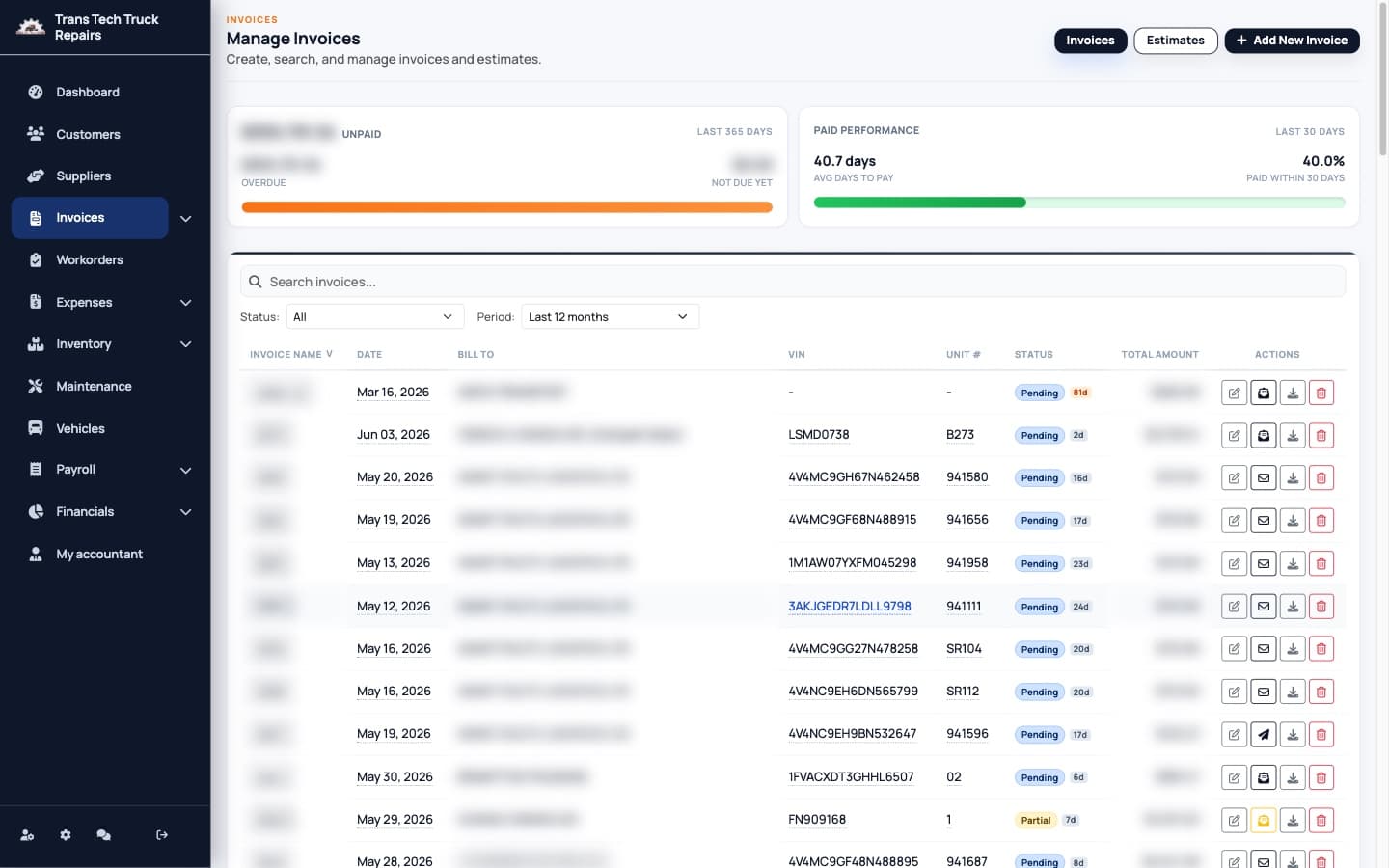
Live customer data is blurred for privacy.
The Challenge
Four truck-repair businesses, all in the same trade, each needed two things at once: a professional public website to win work, and a real back office to actually run the shop — quoting, workorders, invoicing, parts, fleet maintenance and payroll. Building four separate systems from scratch would have meant paying four times for the same engine.
So we built it once. A single shared core powers every shop's operations, while each business gets its own branded website and its own isolated data. New client, new brand, new landing page — same battle-tested platform underneath, live in days instead of months. And most of the busywork — reminders, statements, receipts, inventory, accounting — runs on its own.
Key Features
- Workorders with a tokenized mechanic portal — completing a job auto-creates the invoice and notifies the customer
- Invoicing & collections: statements, Stripe/Clover payment links, and an automatic dunning ladder (email + SMS reminders that escalate as invoices age)
- Auto monthly statements, scheduled invoice sends & automatic payment receipts
- QuickBooks sync — Online (two-way) and Desktop (IIF) — plus auto-generated recurring expenses
- AI assist: mechanic voice-note transcription, cause/correction & invoice-note writing, and expense-document OCR
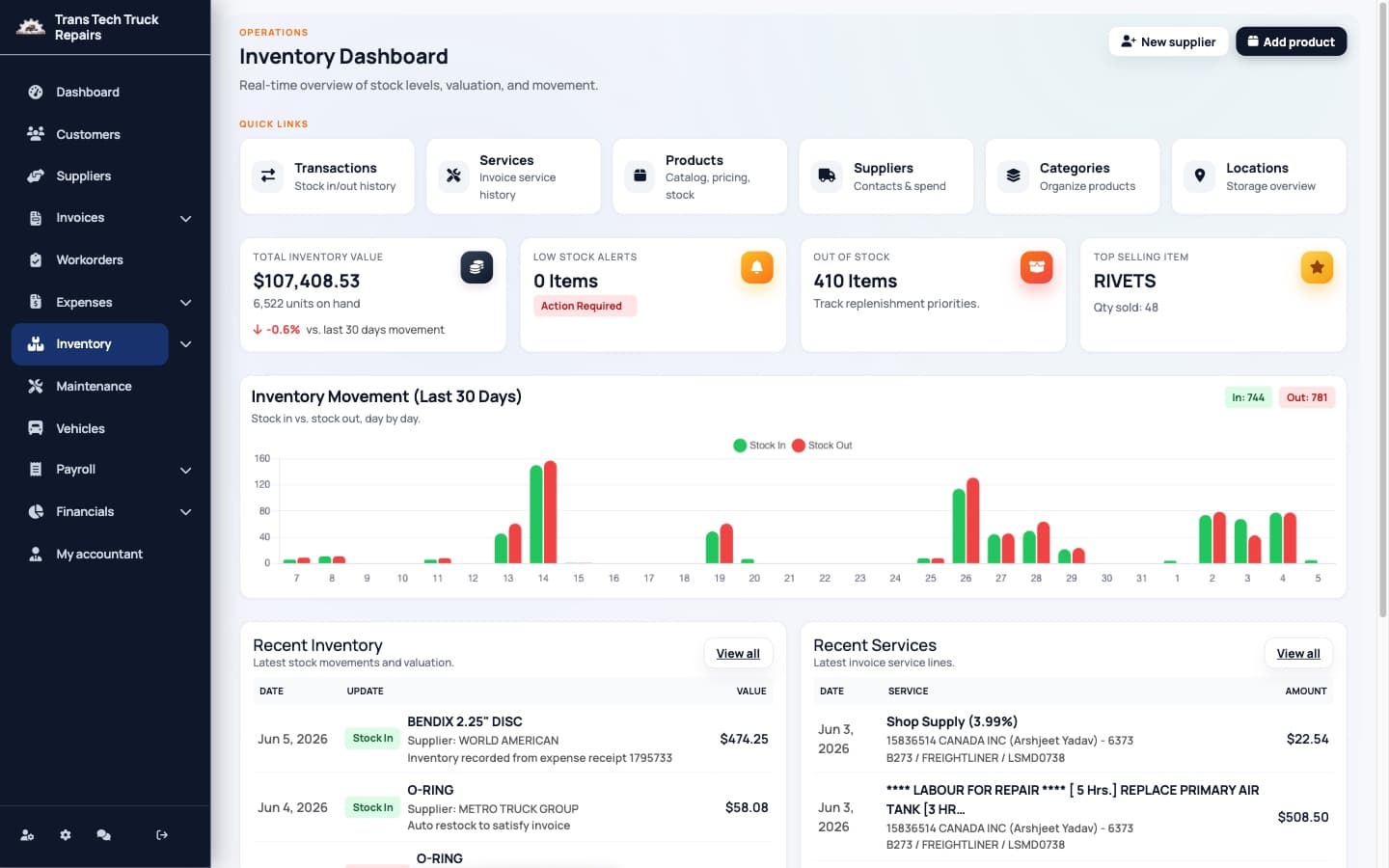
- Parts inventory that auto-adjusts from invoices (low-stock alerts, auto-restock) + a published parts e-commerce store
- Built-in Canadian payroll: timesheets, tax tables, overtime, YTD, paystub PDFs & ADP integration
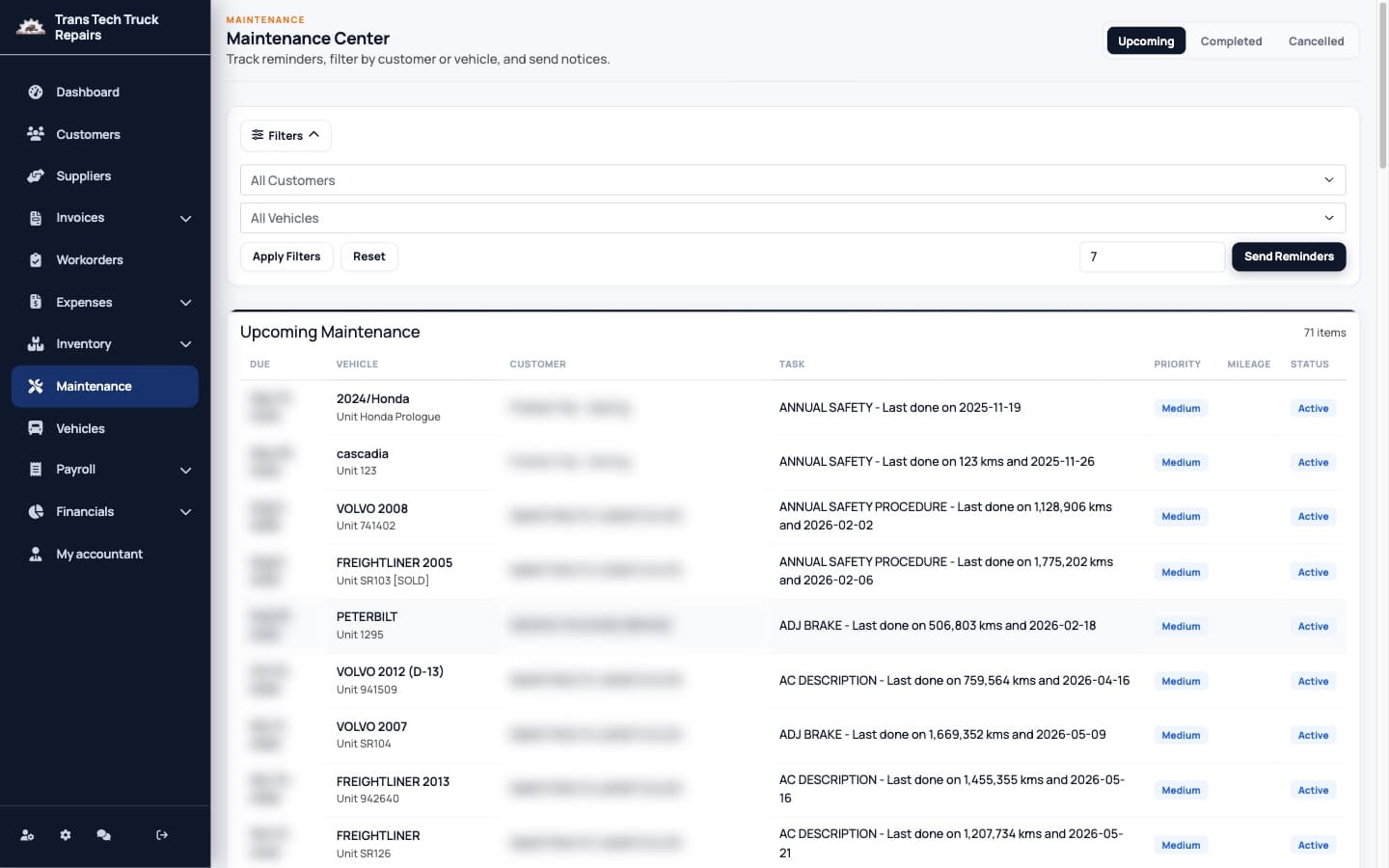
- Fleet & maintenance: vehicle/job history auto-built from invoices, PM inspections & customer-approved reports
- Customer portal/app: clients log in to see invoices, statements, their vehicles, job history, parts used & maintenance due
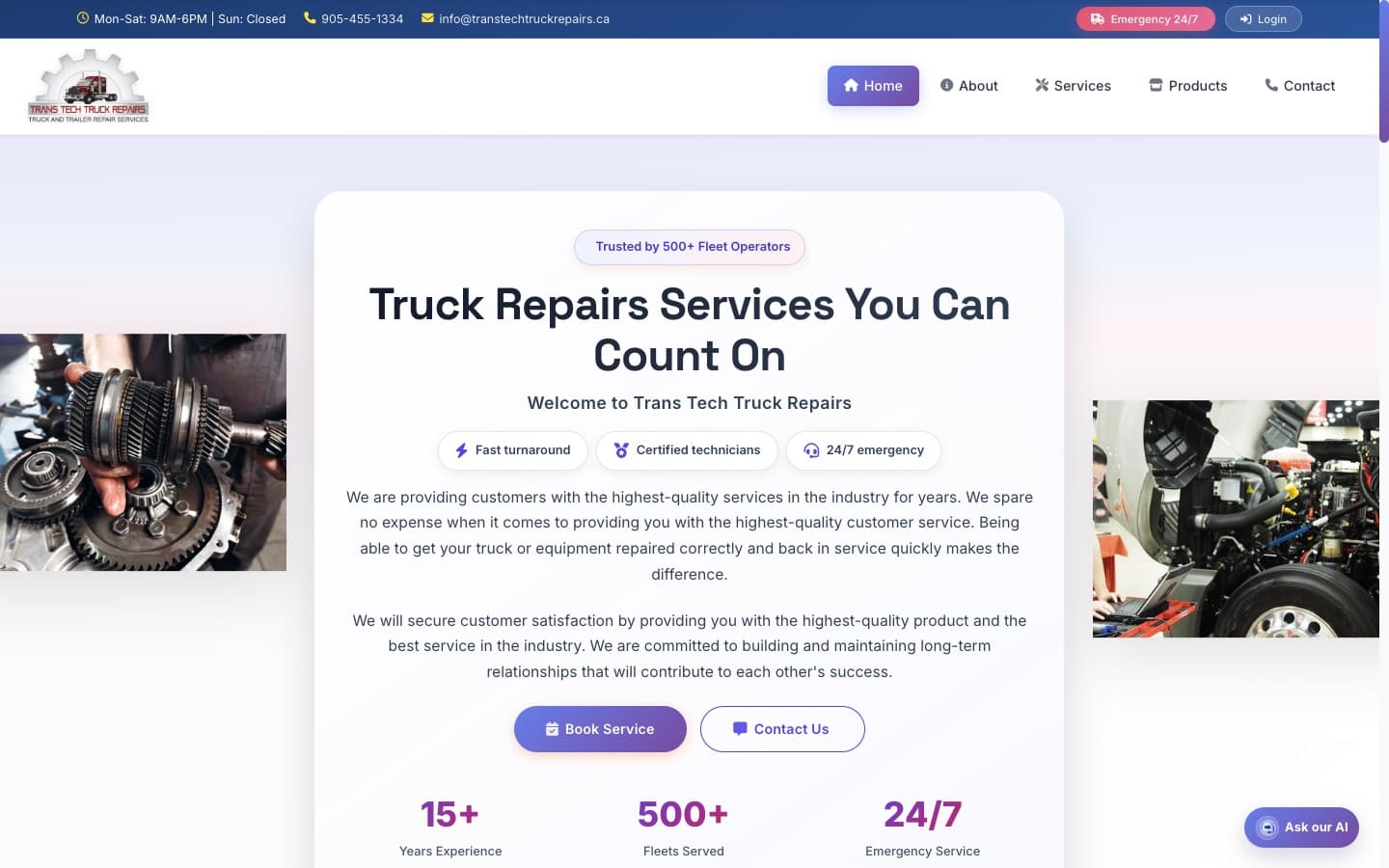
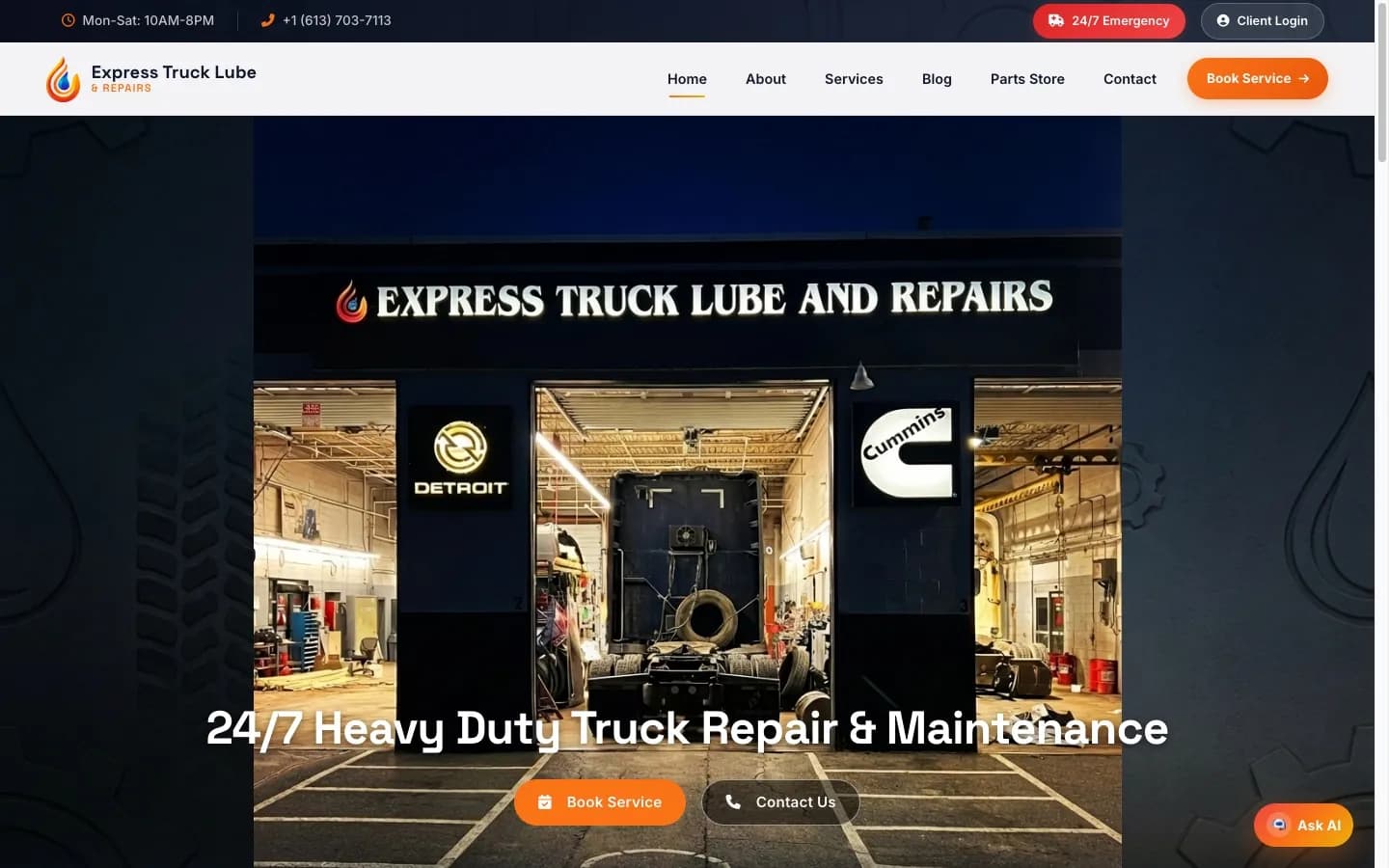
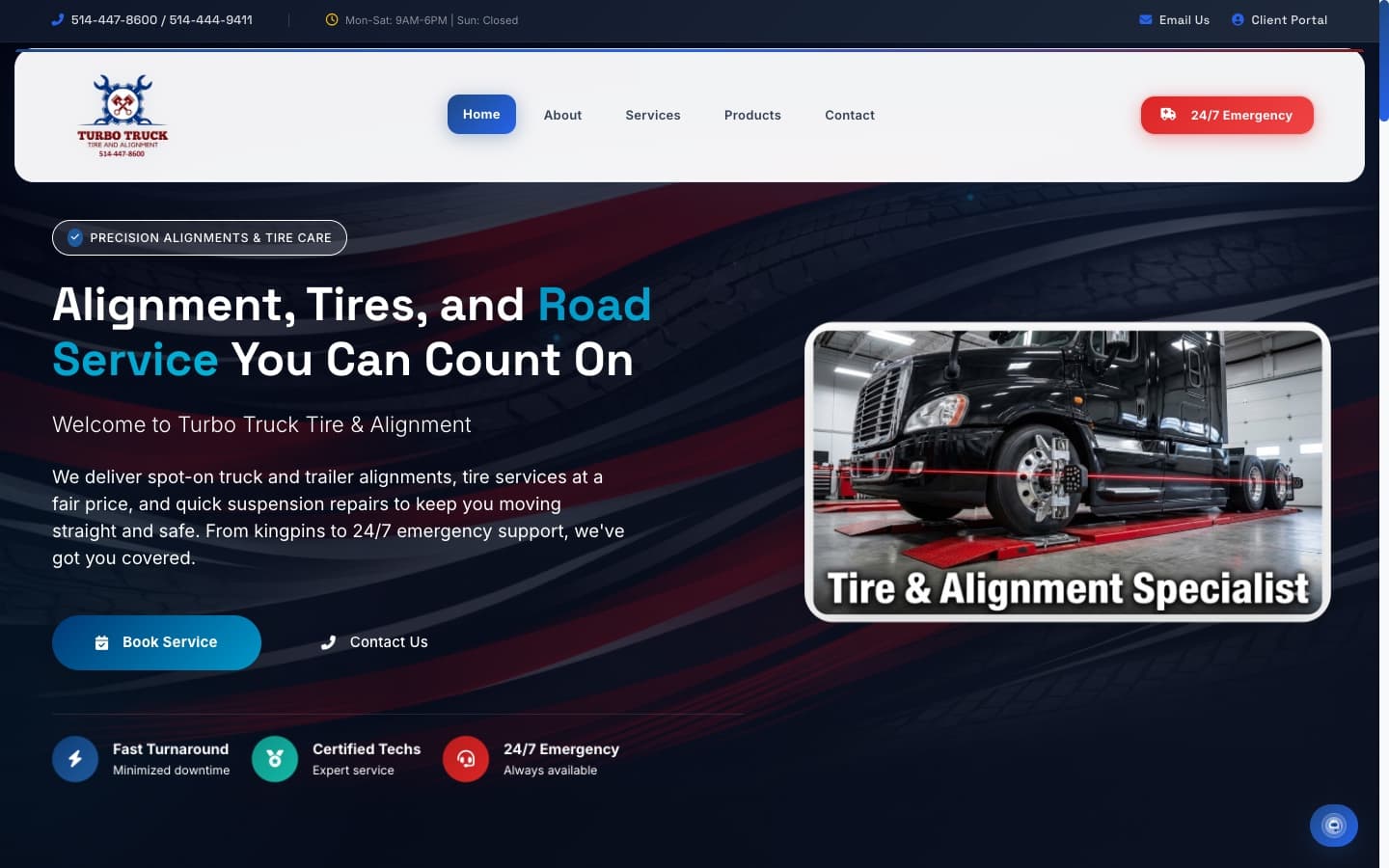
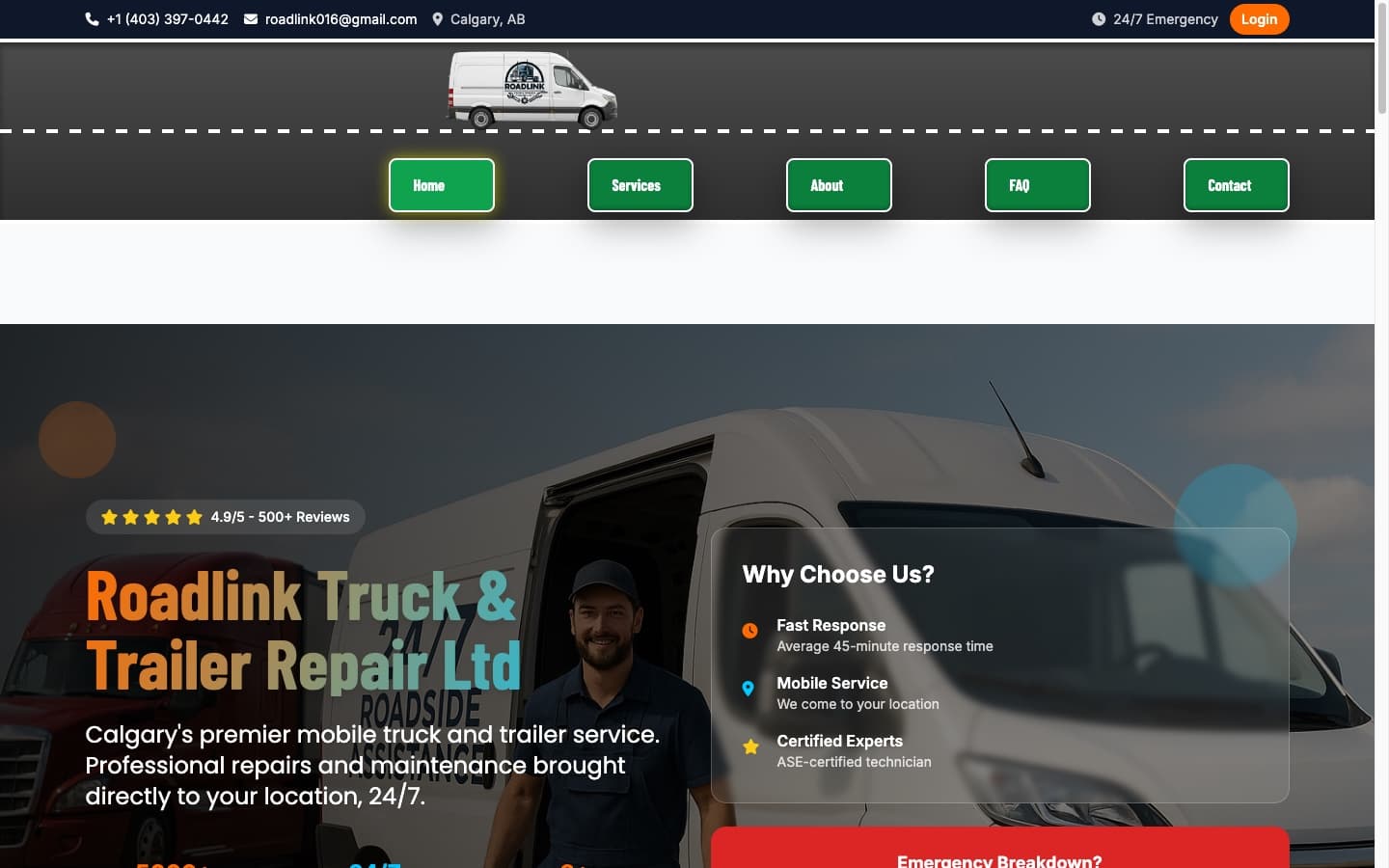
One platform, four brands
Same engine, four distinct identities. Each business runs its own website and customer base — fully isolated, fully theirs.
Billing & collections
Invoicing that chases payment for you
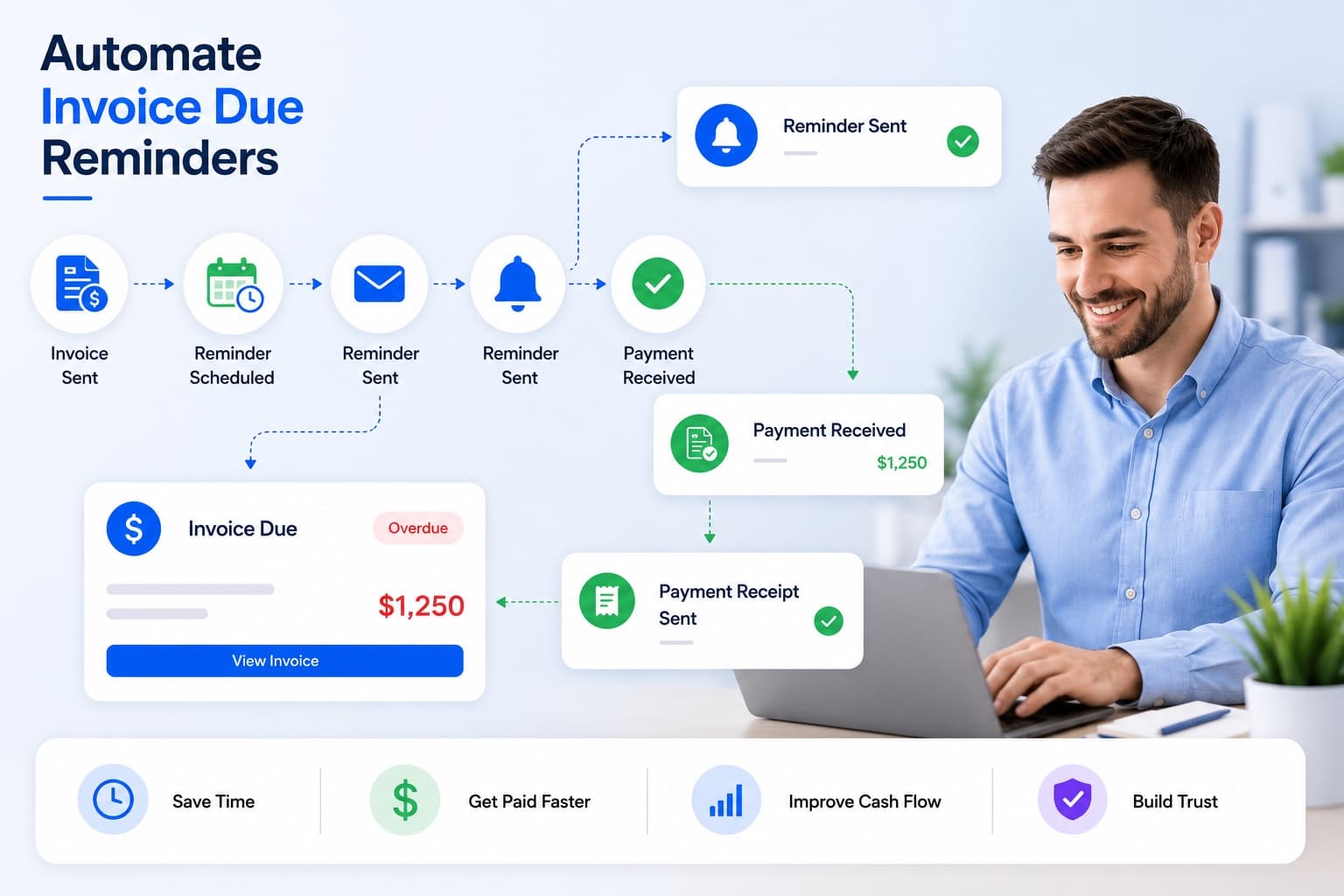
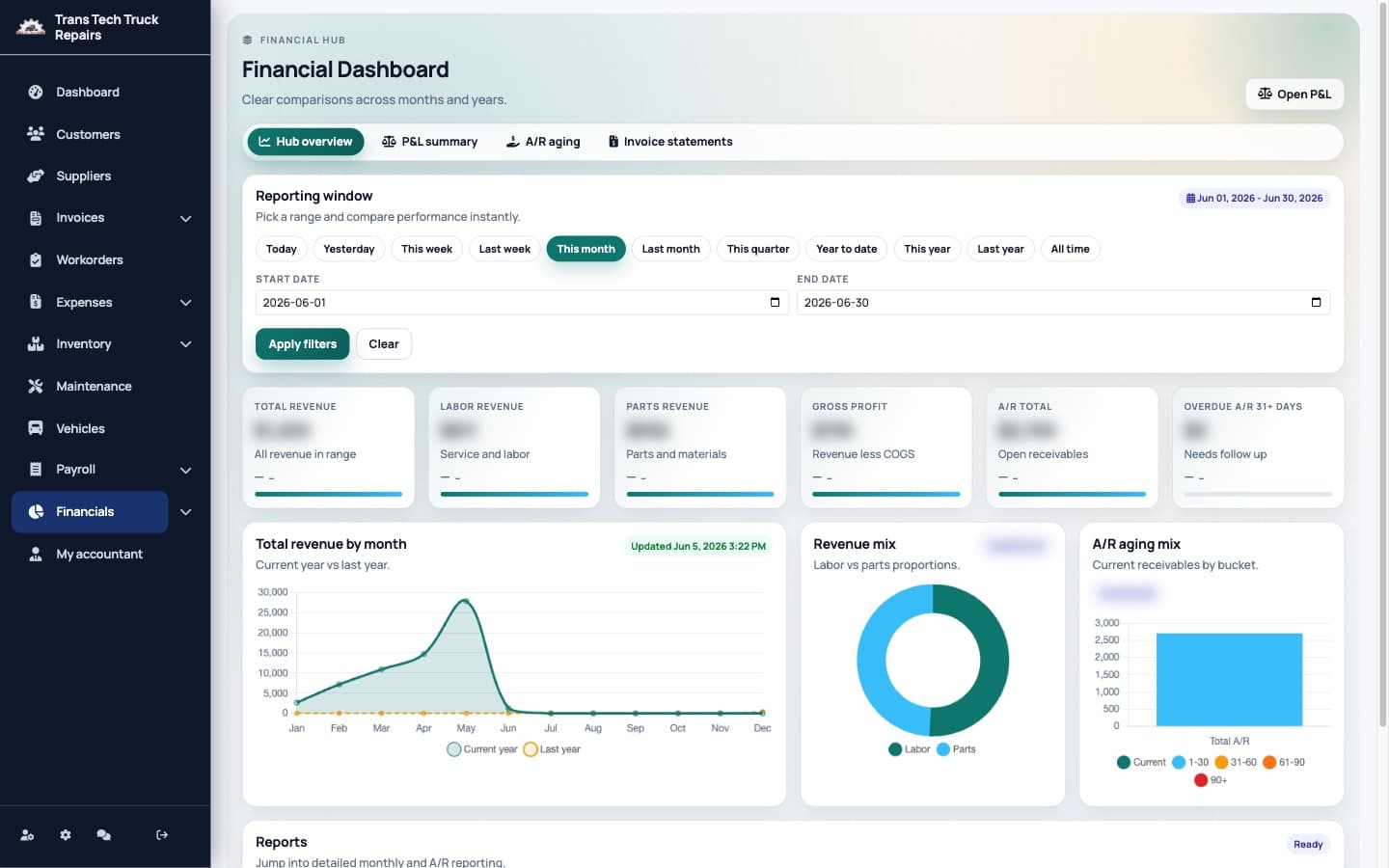
Group invoices by customer, attach Stripe or Clover payment links, and send statements. Then the platform takes over: an automatic dunning ladder escalates overdue reminders by email and SMS as an invoice ages, monthly statements go out on schedule, and a receipt is emailed the moment an invoice is paid in full — collections that used to be a manual chase, on autopilot.
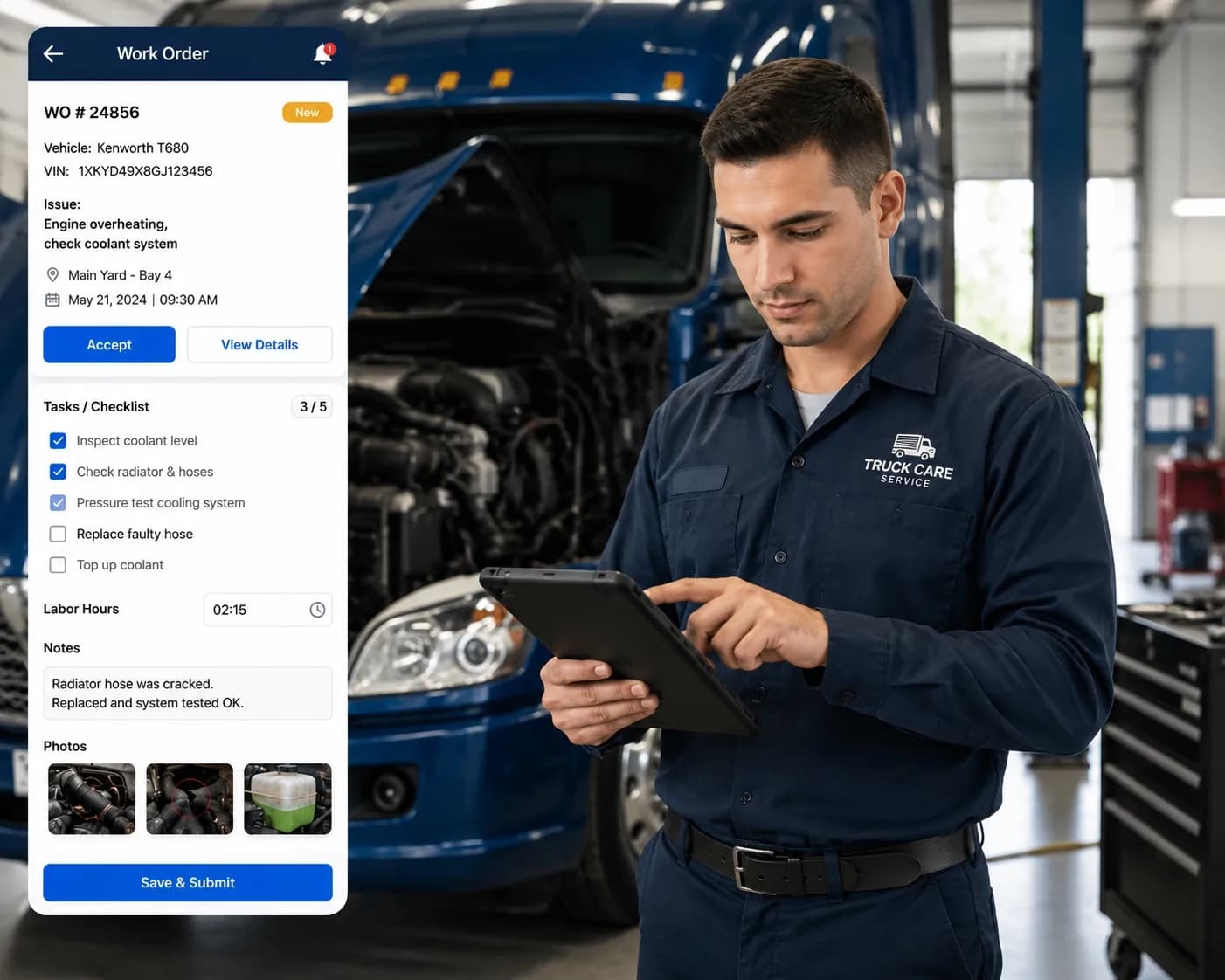
Shop floor
From the bay to a finished invoice
Each job is assigned to a mechanic through their own tokenized portal — they see the unit, the checklist, labour hours and notes, snap photos, and submit the finished work (rework requests included). The moment a job is marked complete the platform auto-creates the invoice, syncs the vehicle's service history, and notifies the customer — no double entry.
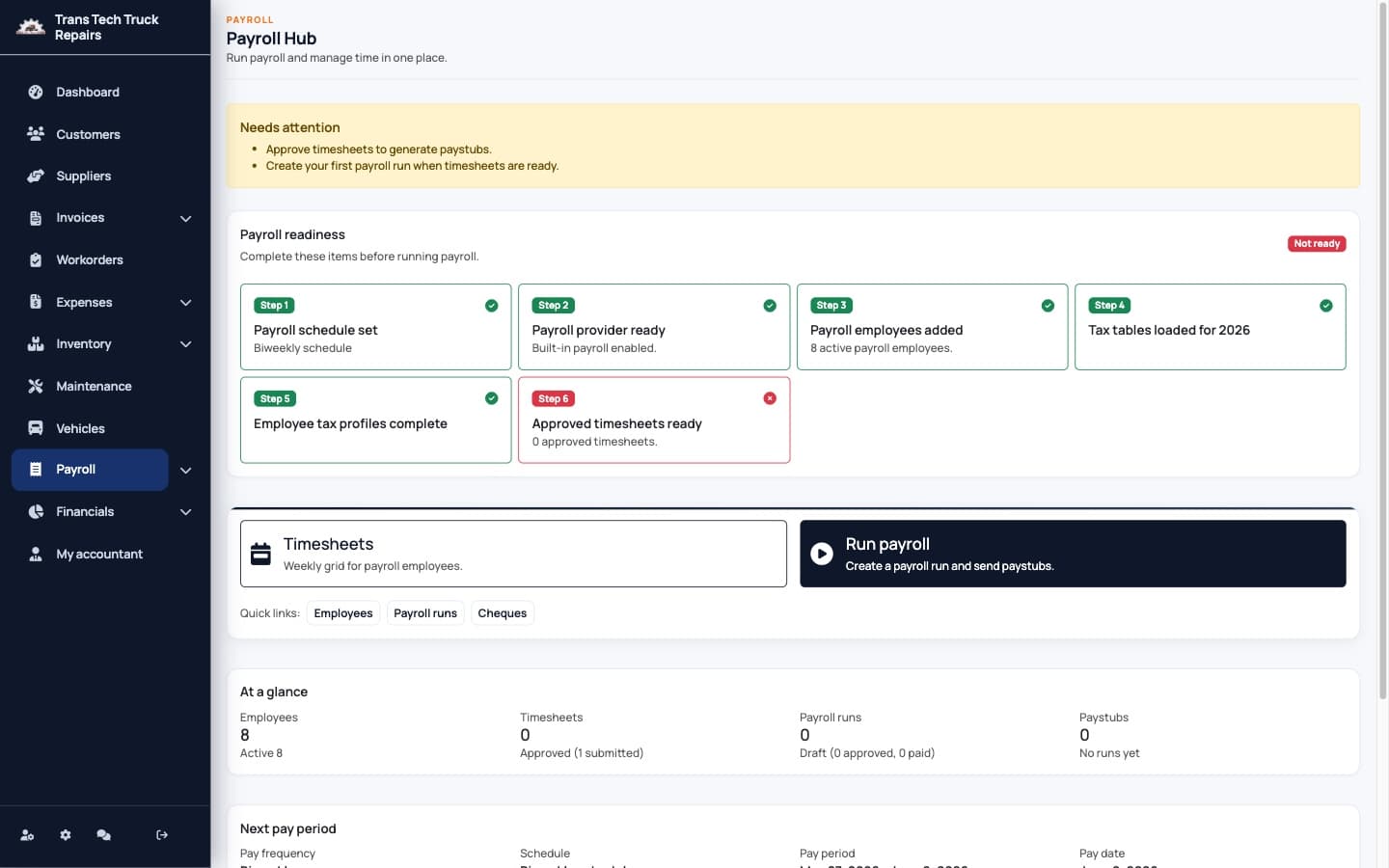
Back office
Full Canadian payroll, built in
Run payroll right inside the platform — timesheets (with optional auto-approval), province-aware tax tables, overtime, pre- and post-tax deductions, employer taxes and year-to-date totals, all the way to paystub PDFs emailed to staff. Prefer ADP? It integrates with that too.
It runs itself
Behind the screens, Django signals and scheduled jobs (Celery + cron) do the repetitive work the moment it's needed — no one has to remember.
Overdue collections
A dunning ladder emails and texts customers as invoices age — escalating through stages automatically.
Monthly statements
Pending-balance statements generate and email themselves on each shop’s schedule.
Payment receipts
The instant an invoice is fully paid, the receipt goes out — fired by a save signal.
Inventory sync
Selling a part on an invoice decrements stock and logs the transaction, with low-stock alerts and auto-restock.
Service history
Every invoice line updates the vehicle’s job history — and creates the vehicle from its VIN if it’s new.
Books & expenses
Invoices flag for QuickBooks sync on save, and recurring expenses post themselves on schedule.
One platform, every workflow
Operations dashboard
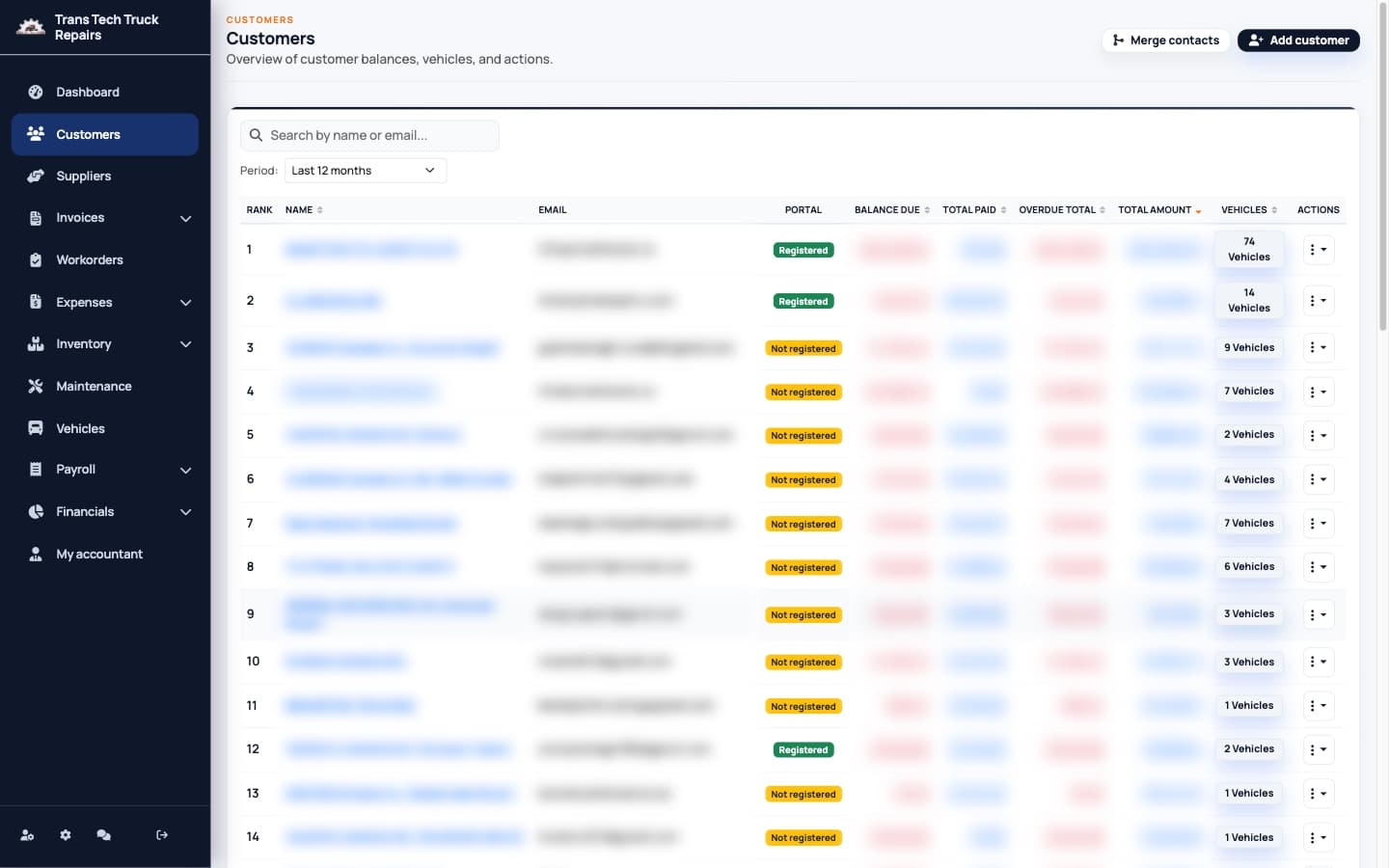
Customers & balances
Parts inventory & stock value
Fleet maintenance scheduling
Financial dashboard & A/R aging
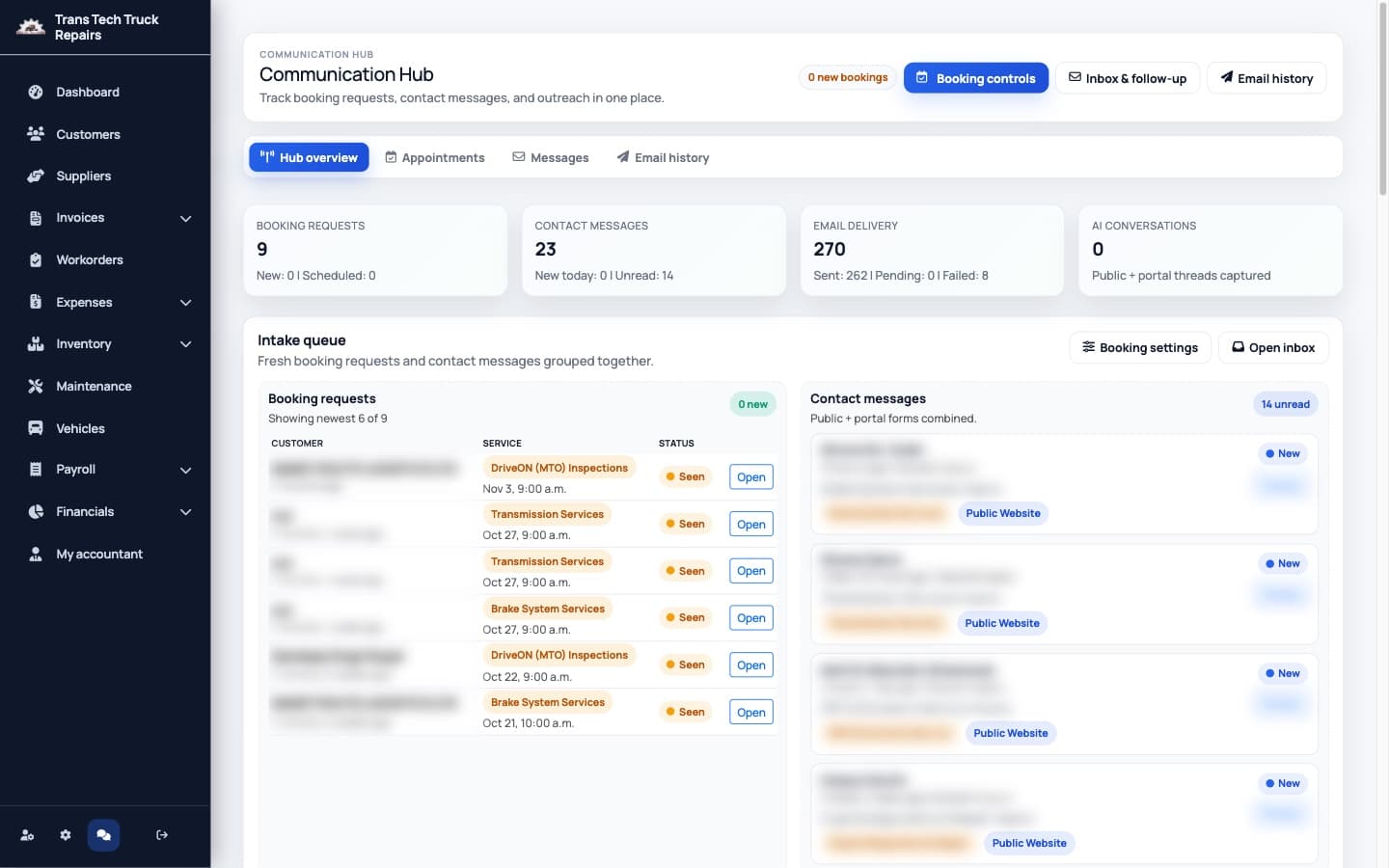
Communication hub
Your customers get an app too
Beyond the back office, every customer gets their own branded portal. They log in to see invoices, statements and balances, track upcoming maintenance, and add their vehicles — then open any truck to see its full job history, the parts used, and what service is due next. Fewer “what do I owe / when’s my truck due” calls; more trust.
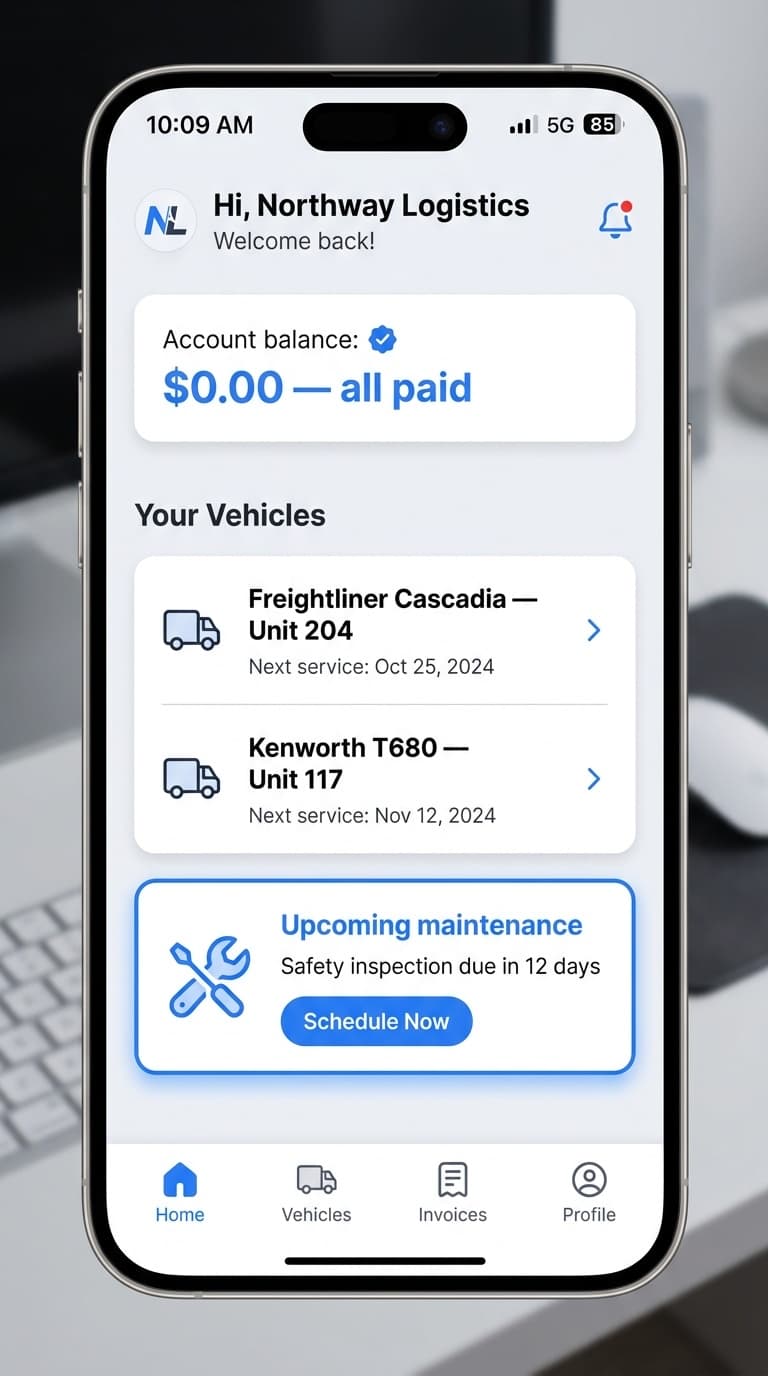
Account & vehicles
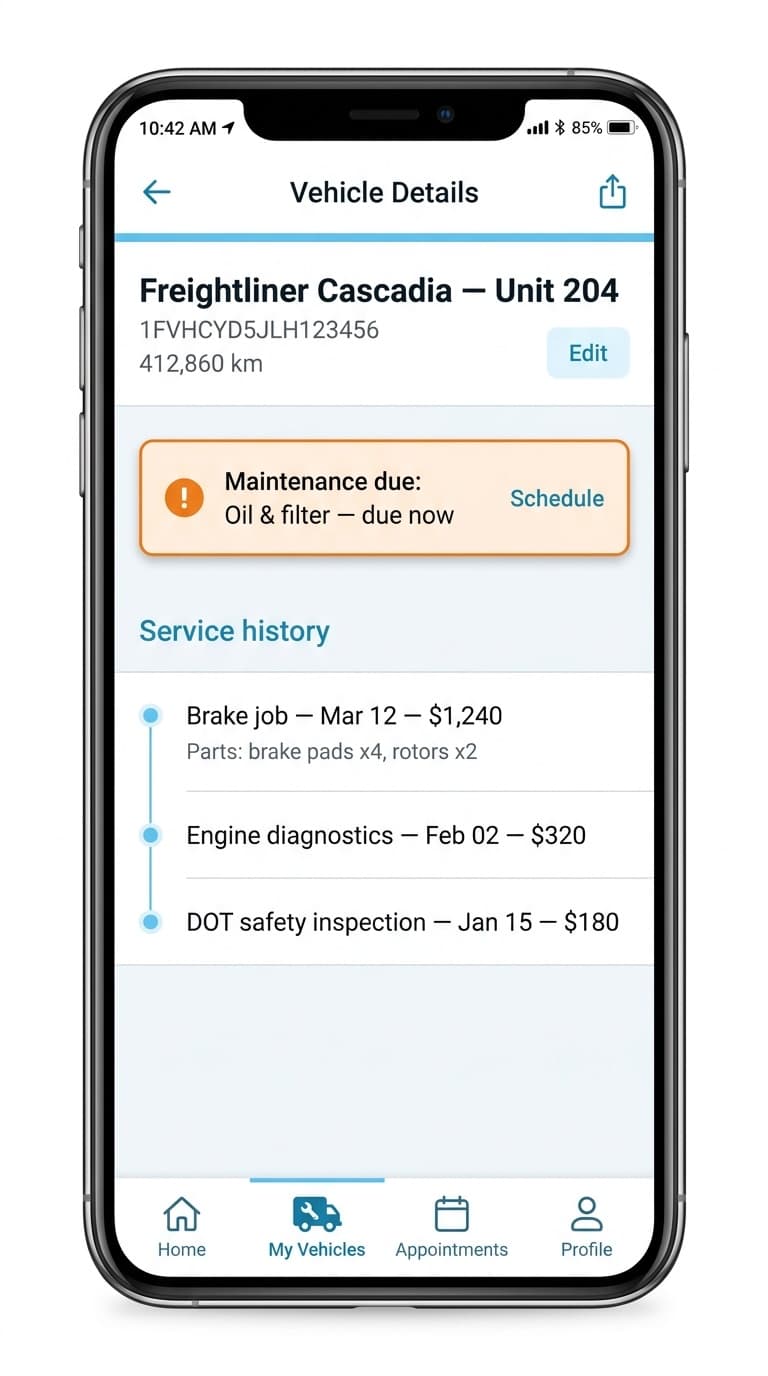
Vehicle history & parts
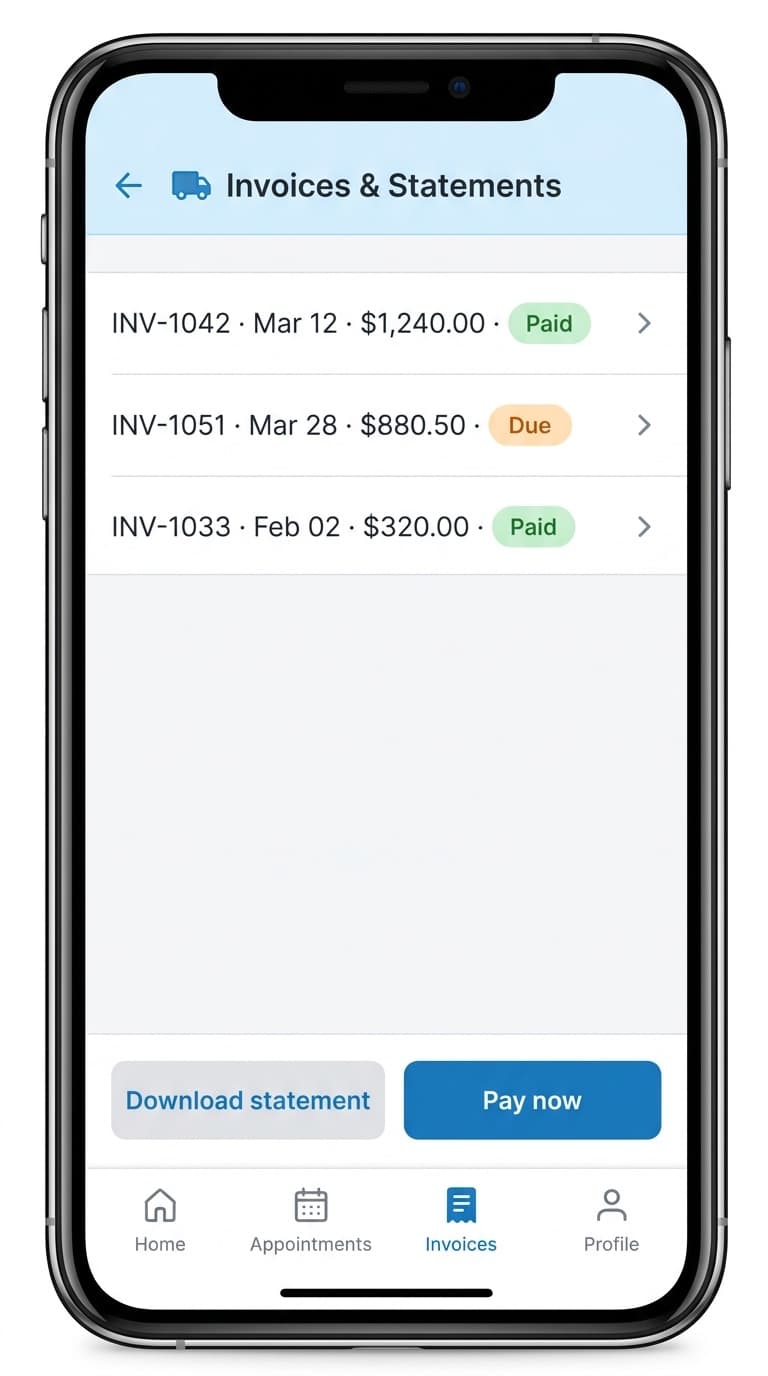
Invoices & statements
Customer app shown for illustration.
Build once, deploy as many brands
A shared core on Django + PostgreSQL, with Celery and cron running the automation, per-brand theming and isolated data. It plugs into the tools shops already use — QuickBooks for the books, Stripe and Clover for payments, Twilio for SMS, and OpenAI plus Google Document AI for the AI features. Onboarding a new shop means a new brand on the same proven engine — not a rebuild.
“We stopped running the shop on paper and spreadsheets. Now workorders, invoices, parts and payroll all live in one system — and our website finally looks like the business we are.”
Need a Complete Business Management ERP?
Streamline your entire operation with a custom ERP. From AI-driven customer portals to automated payroll and heavy-duty inventory management.